
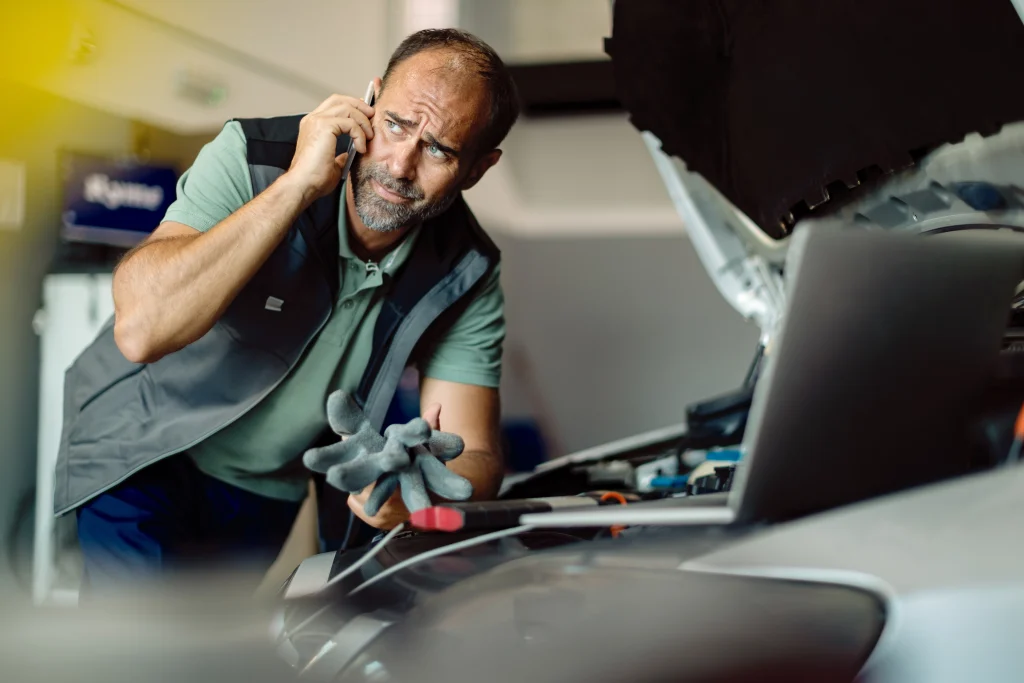
There’s never a convenient time for your car to refuse to start. Whether you’re commuting along US-395, travelling through Downtown Reno, or heading across the Reno-Sparks area, a vehicle that suddenly won’t start can quickly disrupt your plans. Northern Nevada’s hot summers, cold winters, dry conditions, and temperature changes can all affect your battery, starter, alternator, and other important vehicle components.
The good news is that many no-start problems can be diagnosed and repaired without towing your vehicle to a traditional repair shop. Mobile Mechanic Pros of Reno provides convenient on-site diagnostics and auto repair throughout Reno and surrounding communities. If you’re searching for a dependable mobile mechanic Reno, our technicians can come directly to your home, workplace, parking lot, or roadside location.
Here are ten common reasons your car won’t start and what you can do to get back on the road.
1. Dead Battery
A dead or weak battery is one of the most common reasons a vehicle won’t start. Reno’s temperature extremes can put additional stress on batteries. Very hot summer temperatures can accelerate battery deterioration, while cold winter mornings can make it harder for a weak battery to provide enough power to start the engine.
Common Signs of a Weak Battery
- Clicking when turning the key
- Dim headlights or dashboard lights
- Slow engine cranking
- Weak electrical accessories
- Vehicle suddenly losing electrical power
If your battery is weak, a mobile mechanic can test the battery and charging system at your location. If replacement is necessary, a new battery can often be installed on-site.
2. Corroded or Loose Battery Connections
Sometimes the battery itself isn’t the problem. Loose or corroded battery terminals can prevent electricity from flowing properly between the battery and vehicle.
Dust, moisture, temperature changes, and normal battery acid buildup can contribute to corrosion around battery terminals and cables.
Signs of Battery Connection Problems
- Intermittent starting
- Clicking when attempting to start
- Flickering dashboard lights
- Visible corrosion around battery terminals
- Electrical accessories behaving inconsistently
Minor corrosion may sometimes be cleaned, but damaged cables or heavily corroded connections should be professionally inspected.
3. Faulty Alternator
The alternator recharges the battery while your engine is running. If it begins to fail, the battery can gradually lose power until your vehicle eventually won’t start.
Frequent use of air conditioning during Reno’s hot summers can also increase demand on the vehicle’s charging system.
Warning Signs
- Battery warning light
- Flickering headlights
- Weak electrical accessories
- Battery repeatedly going dead
- Electrical problems while driving
A professional charging-system inspection can determine whether the battery, alternator, or another component is causing the issue.
4. Worn Starter Motor
The starter motor turns the engine over when you turn the key or press the start button. If the starter fails, the engine may not crank even when the battery is fully charged.
Common Symptoms
- Single loud click
- Grinding noise
- Engine won’t crank
- Intermittent starting problems
If testing confirms a faulty starter, a mobile mechanic may be able to replace it wherever your vehicle is parked, eliminating the need for a tow.
5. Fuel System Problems
If your engine cranks but doesn’t start, the fuel system could be responsible.
A failing fuel pump, clogged fuel filter, faulty fuel pressure regulator, or another fuel delivery problem can prevent the engine from receiving the fuel it needs.
Common Symptoms
- Engine cranks but won’t start
- Poor acceleration
- Unexpected stalling
- Loss of engine power
- Whining noise near the fuel tank
Professional fuel pressure testing can help determine whether the fuel system is responsible before unnecessary components are replaced.
6. Worn Spark Plugs or Ignition Coils
Your engine needs a properly timed spark to ignite the air-fuel mixture. Spark plugs and ignition coils are essential parts of this process.
When these components become worn or fail, your vehicle may develop misfires, rough idling, hesitation, reduced fuel economy, or difficulty starting.
Possible Warning Signs
- Rough engine operation
- Engine misfires
- Reduced fuel economy
- Check Engine Light
- Difficulty starting
Following the manufacturer’s recommended maintenance schedule for spark plugs and ignition components can help reduce the risk of unexpected ignition problems.
7. Blown Fuse or Electrical Problem
Modern vehicles depend on numerous electrical circuits, fuses, relays, sensors, and control modules.
A blown fuse affecting the starter circuit, fuel pump, ignition system, or another important component can prevent your vehicle from starting.
Reno’s dry environment, dust, temperature changes, and normal vehicle vibration can contribute to electrical connection problems as vehicles age.
Professional diagnostic equipment can help identify electrical faults without relying on guesswork.
8. Faulty Crankshaft Position Sensor
The crankshaft position sensor provides the engine computer with important information about crankshaft position and engine speed.
If the sensor fails, the engine may crank normally but refuse to start because the computer cannot properly control ignition and fuel delivery.
Common Symptoms
- Check Engine Light
- Engine stalls unexpectedly
- Hard starting
- Engine cranks but won’t fire
- Intermittent no-start conditions
A diagnostic scan can help determine whether the crankshaft position sensor or another component is responsible.
9. Security System or Key Fob Problems
Many modern vehicles use electronic immobilizer systems to prevent unauthorised starting.
If your key fob battery is weak or the vehicle doesn’t recognise the key, the security system may prevent the engine from starting.
If you have a spare key, try using it to determine whether the problem is related to the key fob. If the problem continues, professional diagnostics may be necessary.
10. Engine Mechanical Problems
Not every no-start condition is caused by the battery or electrical system. Internal mechanical problems can also prevent a vehicle from starting.
Potential causes include:
- Broken timing belt or timing chain
- Low engine compression
- Internal engine damage
- Severe overheating
- Major mechanical component failure
These problems generally require a detailed mechanical inspection to determine the cause and appropriate repair.
How to Prevent Your Car From Not Starting
Regular maintenance can reduce the likelihood of being stranded with a vehicle that won’t start.
Consider these preventive maintenance steps:
- Have your battery tested regularly.
- Keep battery terminals clean and secure.
- Replace your battery when it reaches the end of its expected service life.
- Follow the manufacturer’s spark plug replacement schedule.
- Pay attention to dashboard warning lights.
- Have unusual starting symptoms checked promptly.
- Keep up with scheduled maintenance.
- Have your charging system inspected if your battery repeatedly loses power.
Addressing small problems early can help prevent a much more inconvenient breakdown later.
Mobile Mechanic vs. Auto Shop: Which Is Better?
When your car won’t start, your first thought may be to call a tow truck. However, many common starting problems can be diagnosed and repaired wherever your vehicle is parked.
Understanding the difference between a mobile mechanic vs auto shop can help you choose the most convenient option.
| Mobile Mechanic Pros of Reno | Traditional Auto Shop |
|---|---|
| Technician comes directly to your location | Vehicle must be taken to the shop |
| Convenient home, workplace, or roadside service | May require towing for a no-start vehicle |
| On-site diagnostics | Diagnosis takes place at the shop |
| Convenient for many common repairs | Vehicle stays at the facility during repairs |
| Less disruption to your schedule | Requires arranging transportation |
Mobile mechanic service can be especially convenient when your vehicle cannot be safely driven. Instead of arranging a tow before the vehicle can even be inspected, a technician can come directly to where it is parked.
Whether you’re in Downtown Reno, Midtown, South Reno, Northwest Reno, Sparks, or nearby communities, mobile repair provides a convenient alternative when your vehicle won’t start.
Why Choose Mobile Mechanic Pros of Reno?
When your vehicle won’t start, getting professional help doesn’t necessarily mean taking your car to a repair facility.
Mobile Mechanic Pros of Reno provides convenient on-site automotive diagnostics and repair services throughout Reno and surrounding communities.
Mobile service can be especially useful for common problems involving:
- Batteries
- Starters
- Alternators
- Electrical systems
- Fuel systems
- Ignition components
- Sensors
- Other common automotive repairs
Instead of spending time arranging a tow and finding transportation, you can have a technician come directly to your location and assess the vehicle.
Get Your Car Back on the Road
A vehicle that won’t start can be caused by something as simple as a weak battery or loose connection, but it can also indicate a problem with the starter, alternator, fuel system, ignition system, or another component.
If your vehicle won’t start, Mobile Mechanic Pros of Reno can help identify the cause and explain your repair options. Our technicians provide convenient on-site automotive service throughout Reno and surrounding areas.
Whether you’re at home, at work, in a parking lot, or stranded roadside, mobile repair can save you the inconvenience of immediately arranging a tow to an auto shop.
If you’re searching for a reliable mobile mechanic Reno, contact Mobile Mechanic Pros of Reno for professional on-site diagnostics and auto repair throughout Reno, Nevada.