
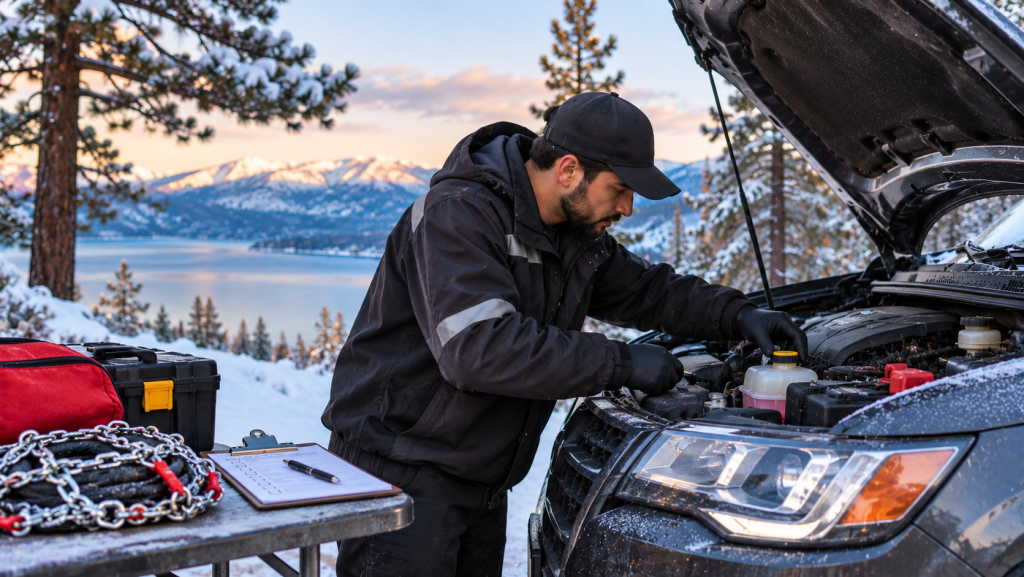
The drive from Reno up to Lake Tahoe is short on the map and surprisingly demanding in winter. You climb quickly, temperatures drop, and a clear morning in the valley can turn into snow, ice and slow traffic on the pass. Most winter trouble on mountain roads is not caused by the storm alone. It comes from a car that was not ready for it. This guide covers what to check before you drive over the pass in snow, which items matter most, how to think about chain control, and when a mobile mechanic can help you get ready at home. If you are searching for tahoe winter car prep in Reno, start here.
Why Mountain Winter Driving Is Different
Climbing and descending a mountain pass asks more of your car than a normal commute. Your engine works harder on the way up, your brakes work harder on the way down, and your tires have to keep grip on surfaces that change from dry to wet to icy within a few miles. Cold air also affects your battery, your fluids and your tire pressure. Our article on high elevation and big temperature swings in Reno explains why this region is already hard on vehicles, and a trip to Tahoe adds more of the same.
The goal of your preparation is simple: find small problems at home, where they are easy to fix, instead of on a snowy shoulder where they are not.
Start With Tires
Tires are the single most important part of winter readiness, because they are the only thing connecting your car to the road.
- Tread. Look at the wear bars in the grooves, or use a tread depth gauge. Worn tires lose grip quickly on snow and slush.
- Pressure. Cold weather lowers tire pressure. Check all four tires, plus the spare, when they are cold, and use the pressure on the door jamb sticker or in your owner’s manual.
- Condition. Look for cuts, bulges, cracks and uneven wear. Uneven wear can point to alignment or suspension issues.
- Type. All season tires, winter tires and tires with a mountain snowflake marking behave differently in snow. Your owner’s manual and a tire professional can explain what suits your vehicle.
Understanding Chain Control
Mountain passes around Tahoe can have chain controls during winter storms, and the requirements can change quickly from one hour to the next. The rules depend on the road, the conditions and your vehicle, so do not rely on a general article, including this one, for the details. Before you leave, check the current road conditions and chain requirements with the transportation agency that covers your route, and look at your owner’s manual, since some vehicles have limits on which chains or traction devices can be used, and some do not allow chains at all.
A few general points are worth knowing:
- Carry the right size. Chains must match your tire size. Check the size printed on the sidewall and the chain packaging before you leave.
- Practice at home. Installing chains for the first time on a cold, dark roadside is hard. Try them once in your driveway in daylight.
- Know where they go. Which axle gets the chains depends on whether your vehicle is front wheel drive, rear wheel drive or all wheel drive. Check your owner’s manual.
- Drive slowly with them on. Follow the instructions that come with the chains.
- Pack gloves and a light. You may need them, and a mat or blanket helps when you kneel in snow.
If your car is not set up for the conditions, the best choice is often to wait, take a different day or use another way to get there.
Check the Battery
Cold weather makes engines harder to start and puts extra load on the battery. A battery that seems fine in the fall can fail on the first freezing morning, and getting stuck at a ski area parking lot is a bad way to find out. Warning signs include slow cranking, dim lights, a battery warning light and a battery that is several years old. A technician can test it in a few minutes. If you have had trouble getting started before, our guide to the top 10 reasons your car won’t start walks through the common causes.
Brakes Matter Even More on the Way Down
Long descents put steady heat and load on your brakes. Before a mountain trip, pay attention to the signs that your brakes need a look:
- Squealing, grinding or scraping noises.
- A soft or sinking pedal.
- The car pulling to one side when you brake.
- Vibration through the pedal or steering wheel.
- A brake warning light on the dashboard.
Brakes are a safety system. If any of these signs show up, have the car inspected by a qualified technician before you go. If the pedal ever feels wrong while you are driving, slow down safely, pull over when you can and do not continue. On snowy descents, a lower gear can help control speed, and your owner’s manual explains what your vehicle offers.
Coolant, Fluids and Washer Fluid
- Coolant. The coolant mix protects your engine from freezing and from overheating. Check the level and the condition, and follow your owner’s manual for the right type and mix.
- Washer fluid. Use a fluid made for cold weather, so it does not freeze on the windshield. Road spray and slush use it up fast.
- Oil. Make sure the level is right and that you are not overdue for service.
- Other fluids. Brake fluid, power steering fluid and transmission fluid are worth a look as well.
See and Be Seen
Snow, spray and short winter days reduce visibility. Check these items before you go:
- Wipers. Replace blades that streak, skip or are cracked. Winter blades are made to handle ice buildup.
- Lights. Test headlights, high beams, brake lights, turn signals and fog lights if you have them.
- Glass. Clean the inside and outside. Check for chips that may spread in the cold.
- Defrost and heat. Make sure the defroster clears the windshield and the heater works.
Pack an Emergency Kit
Mountain roads can close or slow to a stop, and cell service can be unreliable. A small kit makes a delay much easier to handle:
- Warm clothes, gloves, hats and blankets for everyone in the car.
- A flashlight with fresh batteries.
- A phone charger or power bank.
- Water and snacks.
- An ice scraper and a small shovel.
- Jumper cables or a jump starter.
- Your chains, gloves and a mat for installing them.
- A first aid kit and reflective triangles or flares.
Keep the fuel tank at least half full. A full tank gives you a buffer if you are stuck in traffic and need to run the heater now and then. If you do idle the engine while parked, keep the exhaust pipe clear of snow, since a blocked pipe can let dangerous fumes into the cabin.
Know When to Stay Home
No amount of preparation beats good judgment. If a storm is heavy, roads are closed, chain requirements are in effect and you are not equipped, or you are tired, it is reasonable to delay the trip. Plan extra time, check the forecast and conditions right before you leave, and tell someone your route and expected arrival.
Stop Driving If You See These Signs
If any of these happen on the road, pull over in a safe spot as soon as you can and get help instead of pushing on:
- A brake warning light, a soft pedal or brakes that stop working normally.
- Steam, a temperature warning or a burning smell.
- An oil pressure warning light.
- Steering that suddenly feels loose or heavy.
- Any smell of exhaust fumes inside the car.
How a Mobile Mechanic Can Help Before You Go
A mobile mechanic can come to your home or workplace in Reno and look over the items that matter most for a mountain drive. That can include a battery test, a check of tires, wipers, lights and fluids, a brake inspection and help with small repairs such as bulbs and wiper blades. Doing this a few days before your trip leaves time to fix whatever turns up. Some jobs, such as certain tire work, alignment or larger brake and suspension repairs, may need a shop with specialized equipment, and a good technician will tell you honestly which ones those are.
Quick Checklist
- Check tire tread, pressure and condition, including the spare.
- Learn the current chain control rules for your route and carry the correct chains if your vehicle allows them.
- Test the battery.
- Check the brakes for noise, pedal feel and warnings.
- Check coolant, oil and washer fluid.
- Replace worn wipers and test every light.
- Pack an emergency kit and keep the tank at least half full.
- Check road conditions before leaving, and be ready to change your plans.
A little preparation turns a stressful mountain drive into a manageable one. If you would like help getting your car ready, visit the Mobile Mechanic Pros of Reno homepage to learn more, or contact us to schedule a visit before your next trip over the pass.