
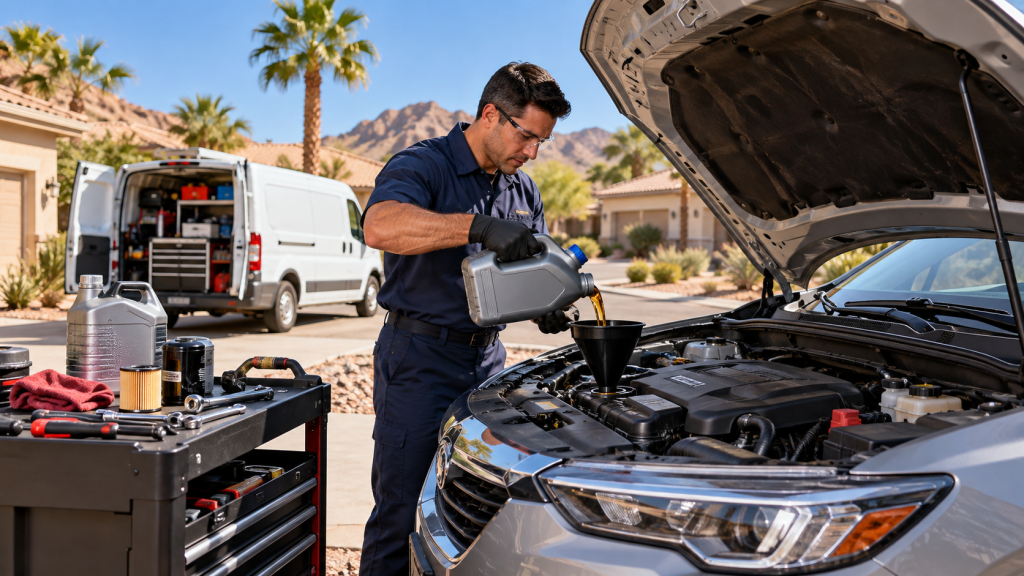
Winter in Reno can change quickly. One morning is clear and dry, and the next brings a dusting of snow, an icy commute, or a storm rolling over the Sierra. Add a trip up to Lake Tahoe, where mountain passes can close or require traction devices, and your car needs to be ready for more than a typical city winter. A little preparation before the first big storm can prevent a dead battery, a spinout, or a long wait on the side of the road. This winter car checklist walks through what to inspect, what to pack, and how to prepare for snow driving in Reno and Tahoe, plus how a mobile mechanic can handle much of it at your home or workplace.
Why Winter Is Hard on Your Car
Cold weather affects almost every system in a vehicle. Batteries lose strength as temperatures drop, fluids thicken, rubber hardens, and tire pressure falls. Snow and ice reduce traction and increase stopping distances, while road treatments can speed up corrosion on the underbody and brake parts. Reno also sees big temperature swings between day and night, which stresses belts, hoses, and seals. A car that runs fine in fall can show its weak points on the first freezing morning, so it pays to check the basics early.
Step One: Test the Battery
The battery is the most common cause of winter trouble. Cold slows the chemical reaction inside it while the engine needs more power to turn over thicker oil. A battery that is a few years old may work fine in mild weather and then fail on the first hard freeze. Warning signs include:
- Slow or labored cranking when you start the engine
- Dim headlights, especially at idle
- A battery or charging warning light
- Corrosion on the terminals
- A battery that is several years old
A quick battery and charging system test can show how much life is left. If your car ever refuses to start, our guide to the top 10 reasons your car won’t start and how to get back on the road explains the usual causes and what to check.
Step Two: Inspect the Tires
Tires are your only contact with a snowy road, so they deserve the most attention. Check the tread depth, since worn tires lose grip fast on snow and ice. Check the pressure on all four tires and the spare when they are cold, and use the number on the label inside the driver’s door jamb or in your owner’s manual, not the number printed on the tire. Pressure drops as the temperature falls, so check it more often in winter. Look for cracks, bulges, or uneven wear, which can point to alignment or suspension trouble.
Some drivers choose tires made for winter conditions, particularly if they travel to the mountains often. Ask a tire professional what suits your vehicle and how you drive. If you plan to carry chains or other traction devices, make sure they fit your tires, and practice putting them on before you need them, not on a dark roadside in a storm.
Step Three: Check the Brakes
Stopping on slick roads takes longer, so brakes should be in good shape before the snow arrives. Pay attention to squealing, grinding, a soft pedal, pulling to one side, or vibration when you stop. Brakes are a safety system, so if you notice any of these, have them inspected. Descending from Tahoe or any long grade also adds heat and wear, and it helps to use a lower gear where your owner’s manual allows it so the engine shares the work.
Step Four: Wipers, Washer Fluid, and Visibility
Snow, slush, and road spray cover your windshield quickly. Replace wiper blades that streak, skip, or leave unwiped patches. Winter blades are made to resist ice buildup, and your parts guide or owner’s manual lists the right size. Fill the washer reservoir with a fluid made for cold weather, since plain water can freeze. Test the front and rear defrosters, and make sure air flows well from the vents. Clear all the snow and ice from the glass, mirrors, lights, and roof before you drive, not just a small patch on the windshield.
Step Five: Lights
Short days and storms mean you will drive in low light more often. Check the headlights, high beams, brake lights, turn signals, and hazard lights. Clean the lenses, and replace any bulbs that are dim or burned out. Cloudy, yellowed headlight lenses reduce how far you can see, so they deserve attention too. Turn on your headlights in snow so other drivers can see you.
Step Six: Coolant and Other Fluids
Coolant, often called antifreeze, protects the engine from both overheating and freezing. If the mixture is weak or old, it may not protect against low temperatures. Check the level in the reservoir when the engine is cool, and ask a technician to test the coolant if you are not sure of its condition. Also check the engine oil, brake fluid, power steering fluid, and washer fluid, following the method in your owner’s manual. Cold thickens oil, so use the viscosity your manufacturer specifies, and ask about the severe service schedule if you drive mostly short trips or in stop and go traffic.
Step Seven: Belts, Hoses, and the Heater
Rubber parts harden and crack in the cold. Look at the belts for cracks or fraying and the hoses for bulges, soft spots, or leaks. A squealing belt on a cold start is a common sign of wear. Make sure the heater and defroster warm up properly, because a heater that blows cool air can point to low coolant or a circulation problem. Our article on high elevation and big temperature swings and what they mean for car care in Reno explains how Reno’s climate puts extra strain on these parts.
Step Eight: Look Underneath
Road treatments used on winter roads can speed up rust on the underbody, brake lines, exhaust parts, and anywhere paint is chipped. Wash the car, including the underside when conditions allow, to remove residue before it does damage. Look under the car for fluid spots or leaks, and take care of chips and scratches before moisture gets under the paint. A technician can inspect the underside for early corrosion and worn suspension parts.
Pack a Winter Emergency Kit
Even a well prepared car can get stuck, and in the mountains help may take a while to arrive. Keep a kit in the vehicle with:
- A warm blanket, extra coats, gloves, and a hat
- A flashlight with fresh batteries
- Jumper cables or a portable jump starter
- A phone charger and a charged phone
- Water and snacks that will not spoil
- An ice scraper and a snow brush
- A small shovel and a bag of sand or kitty litter for traction
- Reflective triangles or flares
- A tire pressure gauge, a basic tool kit, and the spare tire tools
- Tire chains or traction devices that fit your vehicle, if you plan to travel into the mountains
- A basic first aid kit
Preparing for a Tahoe Trip
Mountain driving needs extra planning. Before you leave, check road conditions and any chain or traction requirements for your route, and follow the posted signs and instructions from road crews. Fill the fuel tank before heading up, since delays can mean long waits with the engine idling. Tell someone your route and when you expect to arrive, and leave early so you are not rushing on slick roads. If you do get stuck, stay with your vehicle when it is safe, call for help, and keep the exhaust pipe clear of snow if you run the engine for warmth, so fumes do not build up. Never run an engine in an enclosed space.
Safe Snow Driving Habits
A prepared car still needs a careful driver. Slow down, and leave much more space between you and the car ahead, since stopping on snow and ice takes far longer. Brake, steer, and accelerate gently to avoid skids. If the car begins to slide, ease off the gas and steer where you want to go, and follow the guidance in your owner’s manual about anti lock brakes. Watch for black ice on bridges, shaded corners, and overpasses, where roads freeze first. If conditions become unsafe, the best choice may be to wait until they improve.
A Quick Winter Checklist
- Battery tested and terminals clean
- Tires with good tread, correct pressure, and no damage
- Brakes quiet and responsive
- Wipers replaced if needed, with cold weather washer fluid
- All lights working, with clear lenses
- Coolant and other fluids at the right level and condition
- Belts and hoses free of cracks and leaks
- Heater and defroster working
- Emergency kit stocked
- Fuel tank full before mountain trips
Can a Mobile Mechanic Help With Winter Prep?
In many cases, yes. A mobile mechanic can come to your home or workplace in the Reno area, test the battery and charging system, inspect the tires, brakes, belts, hoses, lights, and fluids, replace wiper blades, and handle many common repairs on site. That saves you a cold trip to a shop and lets you get ready before the next storm. Some jobs, such as tire mounting that needs a machine, major brake work, or repairs that need a lift or specialized equipment, may need a full shop, and a trustworthy technician will tell you honestly when that is the case. When you book, share your vehicle’s year, make, model, and mileage, and mention anything you have noticed, such as slow starts, noises, or warning lights.
Get Ready Before the Snow Flies
Winter preparation takes a little time, and it pays off on every icy morning and mountain trip. A strong battery, good tires, solid brakes, and a stocked emergency kit let you drive with confidence instead of worry. If you have not looked at your car lately, now is a good time to have it checked.
To learn more about our services, visit our homepage. If you would like your car ready for winter, reach out through our contact us page and we will come to you anywhere in the Reno area.