
Reno sits at roughly forty five hundred feet, high enough that the thinner air already changes how an engine performs compared to sea level, but that is really just the starting point for what local drivers deal with. The Truckee Meadows region swings between genuinely hot summer afternoons and cold nights within the same twenty four hours, and for anyone who regularly heads up into the Sierra toward Lake Tahoe, elevation climbs even further on top of Reno’s already meaningful starting height. This combination of base elevation, daily temperature swings, and additional altitude gain for mountain trips creates a set of demands on a vehicle that few other cities combine in quite the same way.
Why Reno’s Elevation Matters Before You Even Add The Swings
At Reno’s elevation, the air contains meaningfully less oxygen than it does at sea level, which affects how efficiently an engine burns fuel and produces power. Naturally aspirated engines lose a noticeable percentage of their rated horsepower simply from operating in this thinner air, and while modern fuel injection systems compensate automatically to a degree, the underlying physics still mean your engine works differently here than it was originally tested for at lower elevations. This baseline effect applies every single day, regardless of season or temperature.
How Reno’s Daily Temperature Swings Add A Second Layer
The high desert climate surrounding Reno produces some of the more dramatic daily temperature swings found in any American city, with summer days regularly climbing into the nineties while nights drop considerably, sometimes by forty degrees or more within a single twenty four hour period. This swing affects tire pressure noticeably, since air inside a tire expands and contracts with temperature, and the combination of elevation and this daily swing means Reno tires can show more dramatic pressure changes than the same swing would cause at sea level, since reduced atmospheric pressure at altitude affects the relationship between temperature and tire pressure.
Batteries face their own version of this compounded challenge, since heat accelerates internal chemical breakdown while cold reduces cranking power, meaning a Reno battery effectively deals with both forms of stress within the same day rather than settling into one steady seasonal pattern. A battery already worn down by a hot Reno summer afternoon may then be asked to perform its hardest job of the day during a cold night start, with very little time to recover in between.
Why Trips To Higher Elevation Compound Things Further
Reno’s proximity to Lake Tahoe means many local drivers regularly climb several thousand additional feet above the city’s already meaningful base elevation for weekend trips or seasonal drives. This additional altitude gain amplifies the same thin air effects already present in Reno itself, meaning an engine already working a bit harder at Reno’s elevation has to work harder still during the climb up toward Tahoe, and brakes face genuine sustained descent demand on the way back down, generating considerably more heat than routine city driving ever would.
This pattern of repeated elevation gain and loss, layered on top of Reno’s own baseline altitude and daily temperature swings, means vehicles that regularly make this trip face a combination of demands that a purely flatland commuter vehicle elsewhere in the country simply never experiences.
Signs This Combination Is Affecting Your Vehicle
Noticeably reduced power when climbing toward Tahoe, a tire pressure warning that seems to appear specifically during Reno’s coldest overnight hours, a battery that cranks slower on cold mornings following a hot stretch of weather, or brakes that feel warm or slightly less responsive after a long mountain descent are all worth having checked. If you have experienced a starting failure that seemed to catch you off guard, our guide on the top 10 reasons your car won’t start and how to get back on the road covers a range of causes, several of which become more likely once Reno’s combination of elevation and temperature swings has already put strain on a marginal component.
Coolant condition deserves a mention as well, since Reno’s dry climate combined with its daily heat and cold cycling can allow coolant to lose some of its protective properties faster than in a more moderate environment. Checking coolant condition alongside the freeze protection rating before winter arrives, and confirming the mixture is appropriate for both Reno’s summer heat and its genuinely cold winter nights, is a simple step that supports the vehicle across the full range of temperatures it faces here.
Simple Habits That Help Reno Drivers Stay Ahead
Checking tire pressure more frequently than you might in a milder, more consistent climate helps account for Reno’s daily swings, and testing battery health proactively rather than waiting for a cold morning to reveal a weakness gives you a real chance to replace a marginal battery on your own schedule. For anyone who regularly makes the drive up toward Tahoe, having brakes checked a bit more often, and using a lower gear during long descents to reduce reliance on brakes alone, both help manage the added strain that mountain elevation adds on top of Reno’s own baseline demands.
Engine oil weight is worth a mention here too, since Reno’s daily swings mean the same oil grade needs to perform reasonably well across a wider temperature range within a single day than a milder, more temperature stable climate would ever demand. Using the manufacturer recommended oil weight, rather than defaulting to whatever happens to be convenient at the last change, helps your engine handle both ends of Reno’s daily temperature swing without unnecessary added strain on startup or during a hot afternoon climb toward the mountains.
Why A Mobile Mechanic Fits Reno’s Combined Challenges
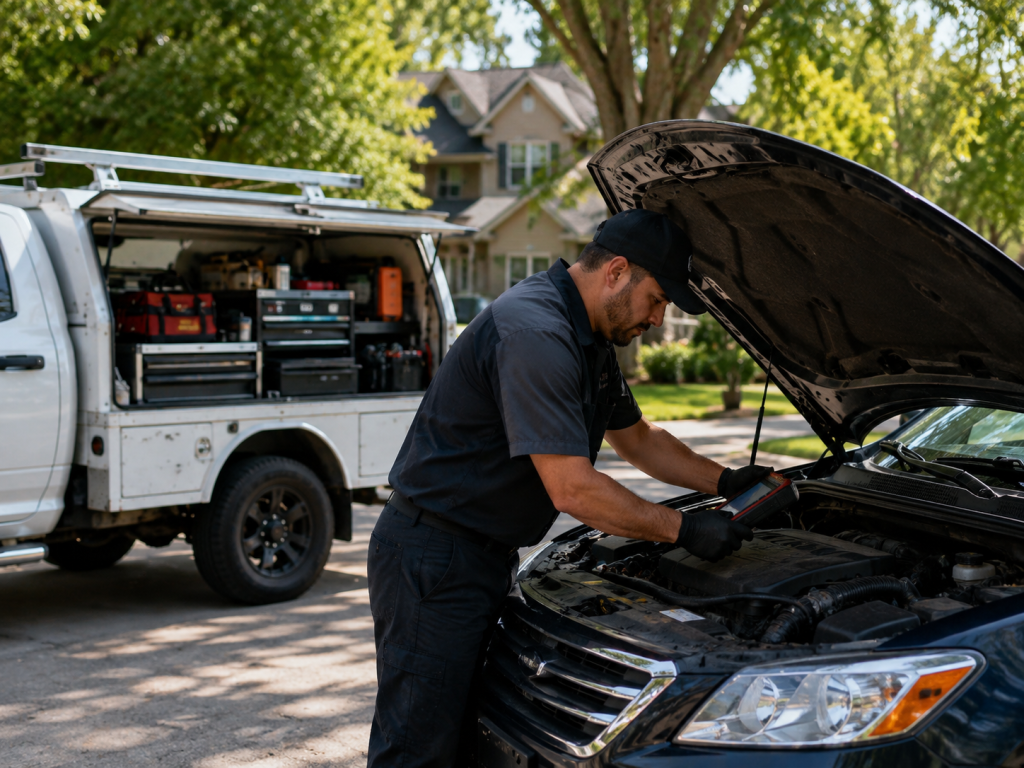
A technician who regularly services vehicles in the Reno and Tahoe corridor understands how elevation and daily temperature swings interact in ways a generic maintenance checklist simply does not capture. Rather than waiting for an obvious failure, a mobile mechanic familiar with this specific combination can inspect tires, battery health, and brakes together, catching early signs of strain before they turn into a problem on a mountain drive or a cold Reno morning.
We covered the broader advantages of choosing mobile service in our article on why mobile mechanics are better than traditional auto shops in Reno, which explains how convenience and local climate familiarity come together, particularly useful for a maintenance challenge as layered as this one.
Stay Ahead Of What Reno’s Elevation And Swings Do To Your Car
Reno’s combination of meaningful base elevation, dramatic daily temperature swings, and additional altitude gain for mountain trips places genuine, layered demands on tires, batteries, and brakes that few other cities combine so consistently. Paying attention to early warning signs and adjusting your maintenance routine to account for all of these factors together is one of the most effective ways to keep your car reliable through another year in the Truckee Meadows, whether your typical drive stays within city limits or regularly climbs toward the Sierra.
If it has been a while since your vehicle had a proper checkup, visit our homepage to learn more about our services, or reach out through our contact us page to schedule a visit at your home or office anywhere in the Reno area.
A little proactive attention now can help your car hold up against everything Reno’s elevation and temperature swings combine to bring.